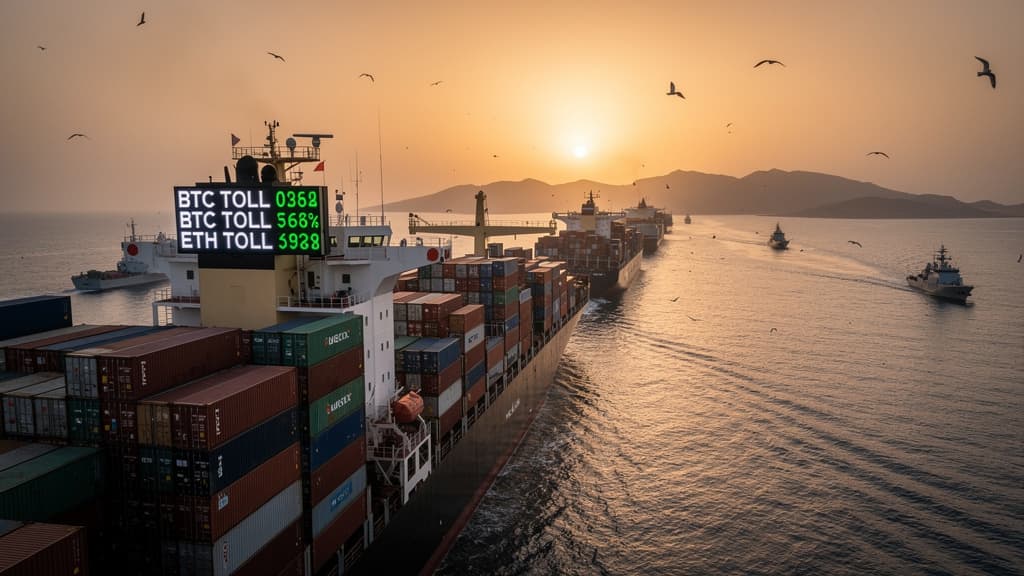
Iran's Cryptocurrency Toll Plan
Iran has announced that ships passing through the Strait of Hormuz will be required to pay tolls in cryptocurrency. The decision comes amid an ongoing ceasefire between Iran and the United States, which has seen limited vessel traffic resume through the vital waterway [1][2]. The Strait of Hormuz is a key maritime corridor, as it is responsible for the transit of approximately 20% of the world's oil supply [1].
Iranian authorities, particularly the oil exporters’ union, have outlined that these fees must be paid in cryptocurrency, although specific details about the cryptocurrencies accepted have not been disclosed [3]. Additionally, vessels will be monitored for any arms being transported through this strategic route [3].
Concerns Over Safe Passage and Economic Impact
Despite the ceasefire, shipowners and insurers have expressed their wariness regarding the safety of traversing the Strait. This is due to the strategic importance of the waterway and its vulnerability to geopolitical tensions [2]. The new toll policy adds another dimension of complexity to the situation, as it requires the maritime industry to adapt to cryptocurrency transactions [3]. This move is seen by some as transforming the strait into a financial marketplace amid the ongoing geopolitical situation [1].
The imposition of such tolls could have significant economic impacts, especially considering the volume of global oil trade that passes through this corridor. The requirement to use cryptocurrency introduces volatility given the digital currencies' fluctuating values [2].
Overview of the Ceasefire's Impact on Trade
Since the onset of the truce, a few vessels have navigated the strait, but the traffic has not yet returned to pre-conflict levels [2]. The maritime industry remains cautious, observing the situation's developments closely [1]. The ceasefire itself follows heightened tensions over recent years, prompting concerns over energy security and the uninterrupted flow of goods through this essential channel [2].
The innovative aspect of Iran's policy lies in its demand for cryptocurrency, which is a relatively novel requirement in international shipping logistics [3]. How global shipping companies and financial markets will adapt to these changes remains to be seen.
Iran's strategic use of the Strait of Hormuz showcases the intersections between geopolitics and economic leverage, exemplified through this latest measure aimed at regulating passage through one of the world's most critical chokepoints.