Background of the Ceasefire Agreement
The current ceasefire between the United States and Iran was announced by President Donald Trump as a conditional measure. This agreement, primarily formed to ease tensions in the region, did not resolve underlying issues leading to the conflict.[4] However, recent developments have put the ceasefire at risk.
Recent Developments in Lebanon
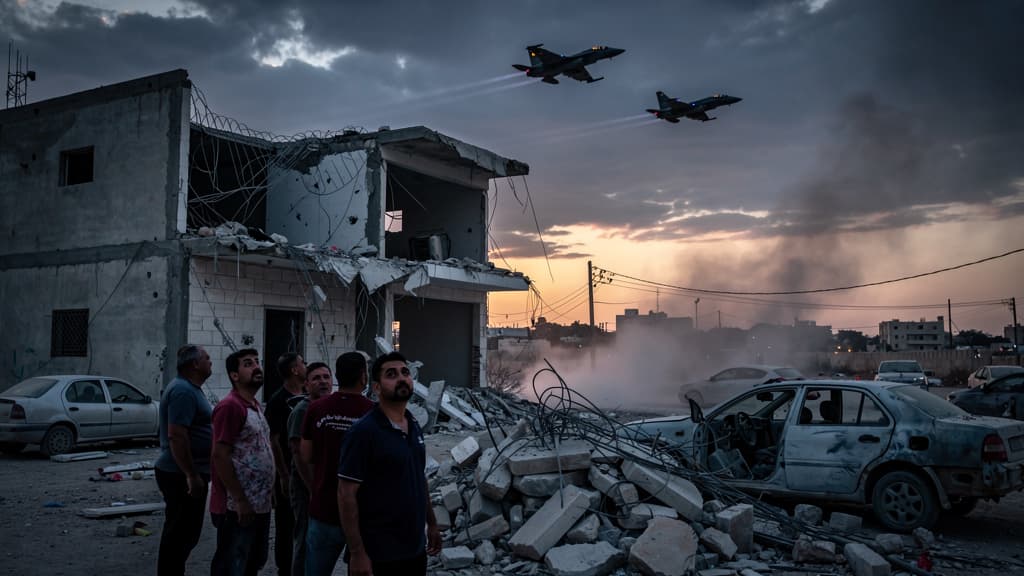
On Wednesday, Israeli forces conducted military strikes in Lebanon, which resulted in at least 250 fatalities according to Lebanon's Ministry of Health.[1] These actions were concentrated in Beirut, causing significant damage and compounding the humanitarian challenges in the region.[3]
Israeli Prime Minister Benjamin Netanyahu has stated that Israel's actions are directed at Hezbollah, and as such, do not fall under the purview of the U.S.-Iran ceasefire agreement.[1] However, Iran has responded by claiming that these attacks violate the spirit of the ceasefire, thereby threatening its continuation.[1]
Implications for U.S. Foreign Policy
The ceasefire's integrity is crucial for maintaining regional stability, and the current tensions highlight the complex dynamics at play. U.S.-Iran relations remain fragile, and this incident underscores the challenges President Trump faces in policing the ceasefire.[5]
Economic and Energy Concerns
The situation also has economic ramifications. Experts, including Jason Bordoff from the Center on Global Energy Policy, warn that the region’s energy infrastructure has been severely impacted, and recovery could take months.[6] The prolonged instability may affect global energy prices, complicating economic outlooks.[6]
Conclusion
The U.S. and its allies are monitoring the situation closely. While the ceasefire remains technically in place, the recent events in Lebanon could necessitate further diplomatic engagements to prevent an escalation and maintain peace in the region.