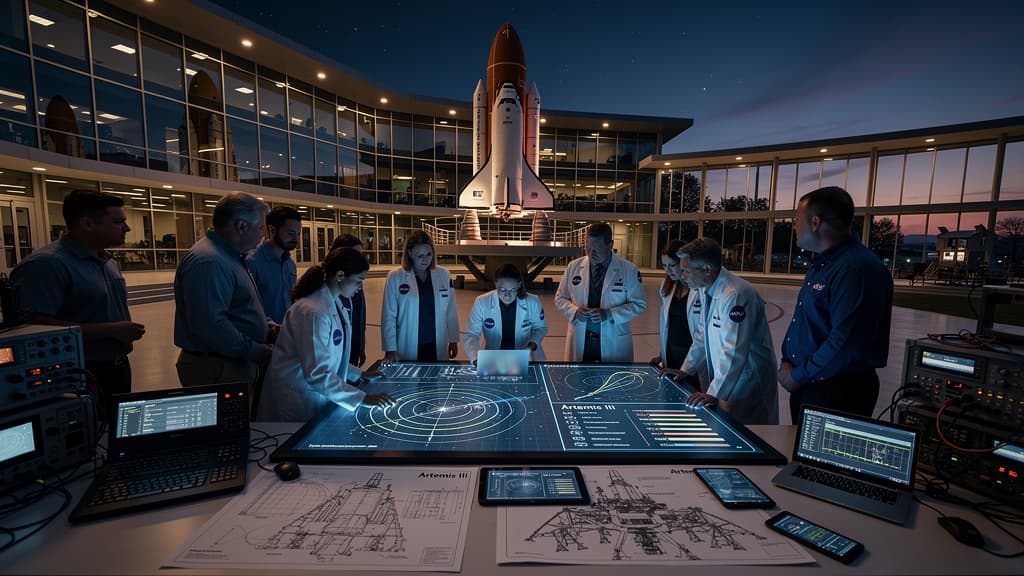
Artemis III Mission Planning
NASA is in the process of making significant decisions regarding the Artemis III mission, slated to return humans to the lunar surface. A primary consideration under review is the initial orbit that the mission will employ as it proceeds towards the Moon. The success of the mission relies heavily on the data and insights gathered from the ongoing Artemis II mission, which is still under way [1].
Current Mission Operations
The Orion spacecraft remains operational as part of the Artemis II mission, which is making its return journey to Earth. This mission has been pivotal for gathering vital information in preparation for future manned lunar missions. The mission is supported by dual control rooms located at NASA’s Marshall Space Flight Center in Huntsville, Alabama. These control rooms ensure real-time operational support to guarantee astronaut safety and fulfill mission objectives during the final phases of the mission [2].
Impact on Artemis Program
The decisions being made around the Artemis III mission are crucial as they will guide NASA’s efforts to land humans back on the Moon, building on the progress made by prior Artemis missions. These efforts are part of broader ambitions to pave the way for sustainable lunar exploration and potential future missions to Mars. The strategic planning is indicative of NASA's methodological work towards ensuring the next lunar landing is safe and successful [1][2].