Trump Comments on Strait of Hormuz
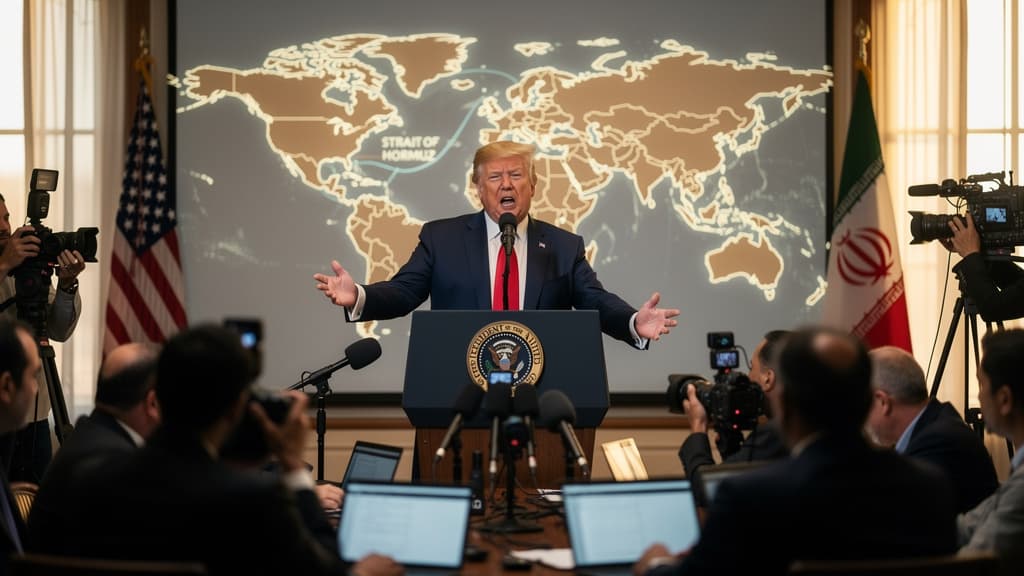
President Donald Trump has publicly criticized Iran, alleging that the country is "doing a very poor job" in managing the reopening of the Strait of Hormuz, a critical passageway for global oil shipments [1]. The Strait has been a focal point of military and economic tensions in recent years.
Trump's comments were made following reports that Iran has plans to impose fees on oil tankers transiting the strategic waterway. President Trump expressed his disapproval, stating that Iran "better not be" enforcing such tolls [2]. His remarks are part of broader U.S. concerns about the current state of affairs in the region and the potential economic implications of Iran's actions.
Regional Tensions and Economic Implications
The Strait of Hormuz, located between the Persian Gulf and the Gulf of Oman, is a vital maritime corridor through which roughly 20% of the world's petroleum passes. Any blockage or increased cost of transit in this region can have substantial impacts on global oil prices and shipping routes.
Despite a ceasefire agreement among regional players, the area remains tense. Recent escalations include military exchanges between Israel and Hezbollah in Lebanon and drone attacks in Kuwait. These incidents underline the fragile nature of the current peace and the complex dynamics at play, affecting both regional stability and international economic interests [1].
U.S. and Iran Relations
Relations between the United States and Iran have been fraught with tension, particularly concerning maritime security and economic sanctions. The U.S. government has previously emphasized the importance of the Strait remaining open and free for international passage, aligning with maritime law regarding innocent passage rights.
The current situation highlights ongoing challenges in U.S.-Iran relations, which frequently fluctuate between diplomatic engagements and heightened confrontations. Discussions about transit tolls by Iran may further complicate these dynamics, as the U.S. continues to advocate for free navigation under international norms [2].