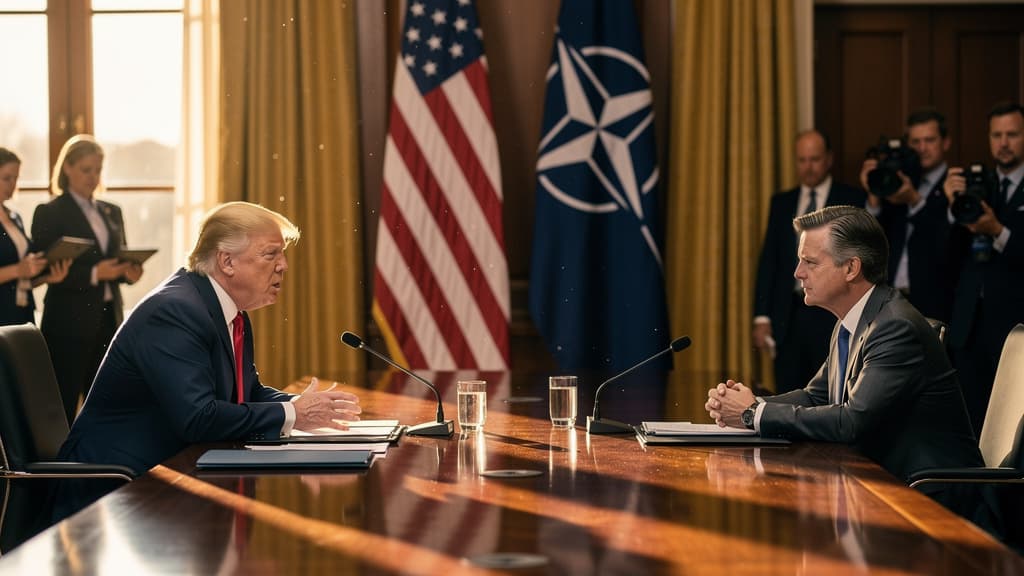
President Trump's Critique of NATO
On April 8, 2026, President Donald Trump met with NATO Secretary-General Mark Rutte to discuss the United States' ongoing concerns regarding the trans-Atlantic military alliance. Following this meeting, President Trump critiqued NATO, signaling possible U.S. disengagement from the alliance. He expressed skepticism about NATO's reliability in aiding the U.S. during critical situations, referencing past instances where he felt the alliance fell short [1][2].
Context of the Meeting
The meeting between President Trump and Secretary-General Rutte was anticipated as tensions had been rising over the Iran conflict. The Trump administration has previously articulated dissatisfaction with what it perceives as insufficient support from NATO members. This has sparked discussions within the administration about the potential for the U.S. to reconsider its role in the alliance [2].
Reactions and Implications
President Trump's remarks have stirred discussions among political and international relations circles about the future of U.S. involvement in NATO. Secretary-General Rutte, while trying to mediate the situation, is faced with the challenge of addressing the administration's grievances without compromising the alliance's collective security commitments. The discussions around this issue highlight differing perspectives on NATO's strategic importance to global security [1][2].
Background on NATO Relations
NATO, formed in 1949, serves as a collective defense pact among its 30 member countries. The alliance has historically been a cornerstone of United States foreign policy. However, under President Trump's leadership, there has been a shift towards examining the financial and strategic contributions of NATO members, with an emphasis on equitable defense spending [1][2].
As these discussions continue, observers within the U.S. and amongst NATO allies are focused on potential policy shifts that could arise from these negotiations.