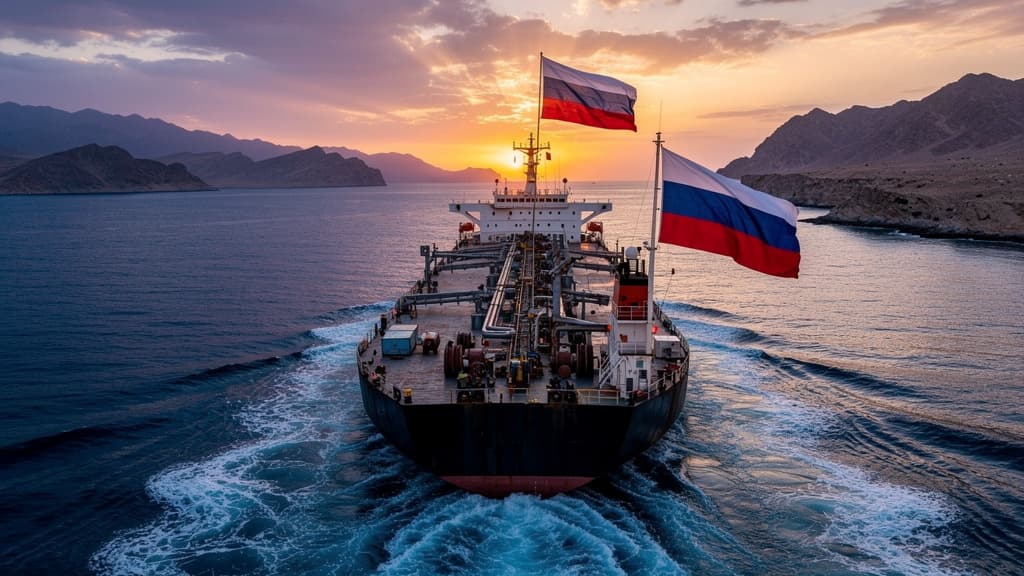
Russian Tanker in Hormuz
A Russian-flagged supertanker recently traversed the Strait of Hormuz into the Persian Gulf, attracting significant attention due to the general increase in geopolitical tensions in the region, particularly involving Iran. This marked a rare movement for Russian vessels in the area, raising concerns and scrutiny among traders who monitor every transit through the waterway critically impacted by conflict [1].
Geopolitical Context
The passage of the Russian tanker comes as tensions mount between the United States and Iran. President Donald Trump has expressed optimism regarding future diplomatic agreements with Iran. However, he has also issued warnings to Tehran against imposing fees related to passage through the Strait of Hormuz, a crucial conduit for a significant portion of the world's oil supply [2].
Economic Implications
The geopolitical climate has already influenced global energy markets. North Sea oil prices have surged to record highs as a direct consequence of the situation in the Strait of Hormuz. The failure of a recent Washington-Tehran ceasefire to ease the energy crisis continues to exert upward pressure on oil prices, affecting global economies [3].
Wider Regional Developments
On a related note, broader regional dynamics are also playing out with Israel and Lebanon scheduled to engage in direct talks next week. Despite this planned engagement, Israeli Prime Minister Benjamin Netanyahu has indicated that operations targeting Hezbollah will continue, adding an additional layer of complexity to the geopolitical situation [2].
Market and Security Implications
The strategic significance of the Strait of Hormuz as a maritime chokepoint amplifies the potential economic consequences of any disruption. Global oil markets are particularly sensitive to shifts in policy and security conditions in this region, necessitating keen observation by market participants and policymakers alike. The ongoing tensions and recent tanker negotiations underscore the fragile balance in international energy and security affairs.