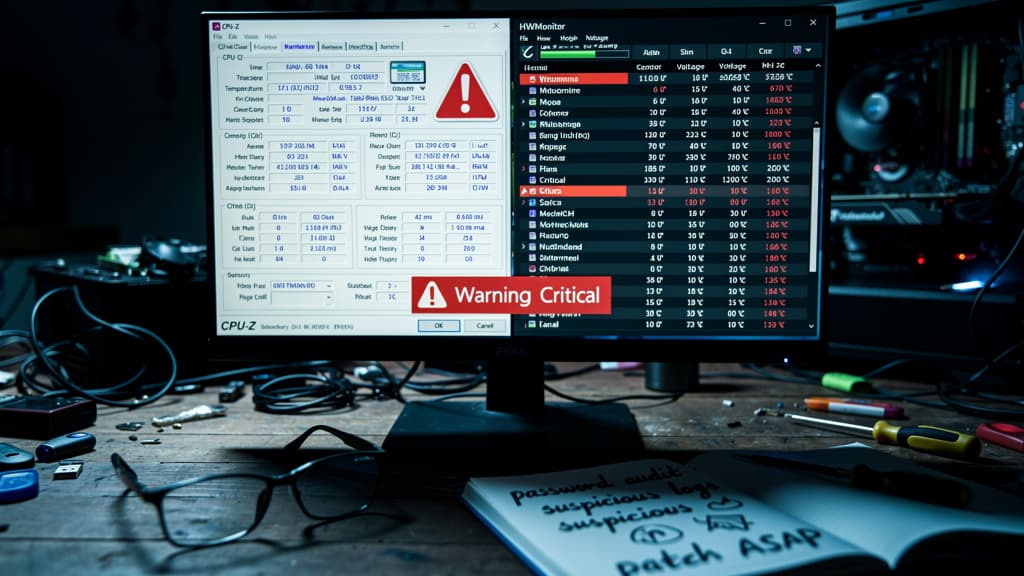
Widely Used Monitoring Tools Compromised
CPU-Z and HWMonitor, both popular for their use in diagnosing and monitoring computer systems, have been found compromised. Reports indicate that these tools, which are frequently utilized by a large base of PC users to check the hardware status and monitor temperatures, are now potentially jeopardizing data security [2].
Nature of the Compromise
Though detailed technical specifics of the breach remain limited, it has been confirmed that the official download sources for these applications have been infiltrated. This breach allows the distribution of altered versions of the software that could potentially execute malicious activities on the system [2].
User Response and Potential Risks
The discovery has led to significant concern among users, particularly within the PC enthusiast community, who rely heavily on these applications for system performance monitoring. The potential risks involve unauthorized data access and increased susceptibility to further security threats if users do not scrutinize the origin and integrity of their software downloads [2].
Immediate Precautions Suggested
Users are advised to verify and ensure the authenticity of the software on their systems. Additionally, employing antivirus tools to scan for malware is recommended to safeguard against any exploits stemming from the compromised versions. Such precautions are essential until official fixes and verified software versions are confirmed and made available [2].
Broader Implications for Software Security
This incident highlights ongoing challenges in software security, particularly with the increasing sophistication in attack vectors targeting popular consumer software. Monitoring and diagnostic tools, due to their extensive access to system resources, present valuable targets for such security compromises [2].
Future Measures
Developers and companies managing such applications are urged to reinforce their security measures, focusing on protecting download channels and the integrity of software distributed to users. Enhanced security protocols could mitigate similar risks in the future, ensuring a safer digital environment for users worldwide [2].