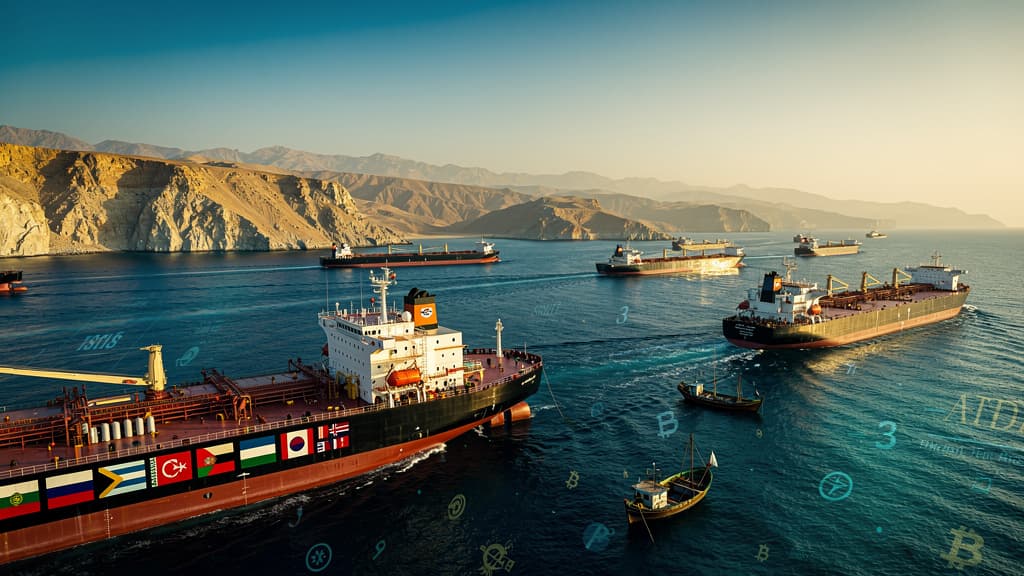
Cryptocurrency Payments Required at Strategic Shipping Channel
Iran has announced a new protocol mandating that all tankers transiting the Strait of Hormuz must pay tolls in cryptocurrency. This measure necessitates that vessels disclose their cargo to enable Iran to calculate appropriate fees [1].
Impact on Shipping and Global Trade
The Strait of Hormuz is a critical channel for global oil trade, with a significant portion of the world's petroleum passing through its waters. The introduction of cryptocurrency as a payment method marks a novel approach to toll collection in this strategic location. Iranian officials have not specified which cryptocurrencies will be accepted, nor the mechanisms by which these payments will be managed [1].
Background: Recent Disruptions and Agreements
The requirement for cryptocurrency toll payments follows a period of disruption in the Strait brought about by conflict in the region. A recent ceasefire has allowed for a partial resumption of shipping routes, but experts indicate a full recovery will take several months due to existing backlogs and infrastructure damage [2]. As the area stabilizes, the international shipping community is adjusting to these new regulatory and operational demands.
Broader Implications for the Cryptocurrency Market
This development could have broader implications for the use of cryptocurrency in international shipping and trade. It represents a shift in how nations leverage digital currencies for economic and strategic control over key maritime routes. As a leading conduit for oil and gas transport, policy changes in the Strait of Hormuz are likely to influence global shipping practices and economic flows [1][2].
Ongoing Developments and Industry Response
Shipping companies and global markets are closely monitoring the situation as they adapt to these new requirements. Industry analysts are considering the ramifications for cargo flow efficiency and cost changes associated with cryptocurrency volatility. Further announcements are expected as Iran clarifies the operational details of its new toll collection method [1][2].