Ceasefire Agreement
President Donald Trump has announced a temporary halt on military action against Iran, extending a previously set deadline for two weeks. This decision follows Iran's commitment to reopen the Strait of Hormuz, a critical maritime corridor for global oil shipments [1][2]. The ceasefire arrangement hinges on Iran's fulfillment of its promise to ensure unimpeded passage through the strait [2].
The Strait of Hormuz, a vital conduit linking major oil-producing states with the global market, has been at the center of heightened tensions. Iran's decision to restrict passage through the strait sparked concerns over potential disruptions to international trade and energy supplies [5][7].
Diplomatic Efforts
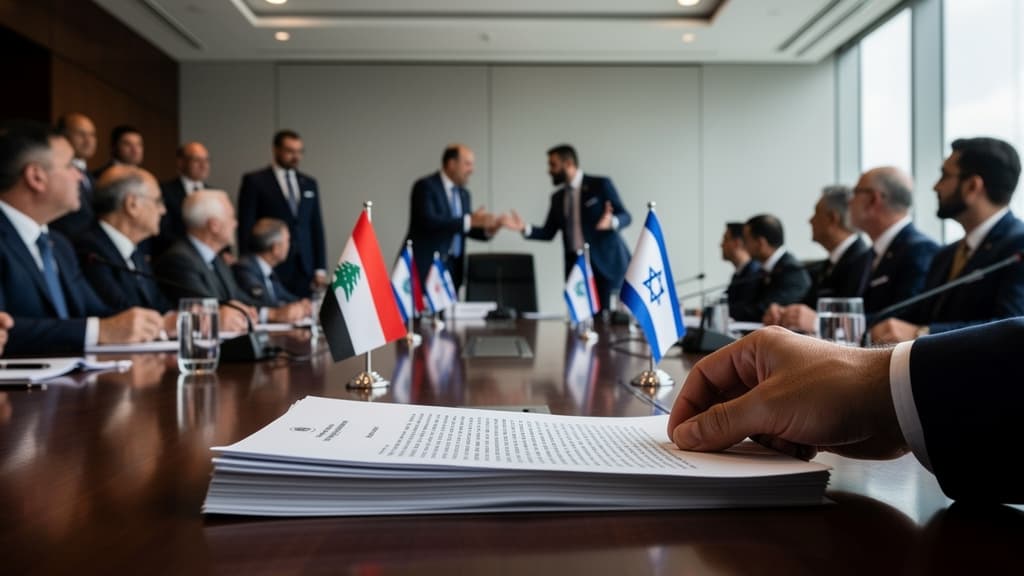
The ceasefire comes amid calls from the international community for de-escalation. Pakistani Prime Minister Sharif, among others, has advocated for diplomacy as a means to resolve the conflict. Sharif emphasized the importance of allowing diplomatic efforts to unfold, potentially leading to a peaceful resolution [3].
Despite these diplomatic initiatives, a United Nations Security Council resolution aimed at bolstering security in the region was vetoed by Russia and China. The resolution had garnered support from 11 out of 15 council members before it was blocked [4][5].
Global Context
The ongoing conflict in and around the Strait of Hormuz has contributed to regional instability, with significant ramifications for the Middle East. Humanitarian and economic pressures have intensified as hostilities continue to impact civilian life and critical infrastructure [6].
Critics have described President Trump's prior threats to "annihilate Iran's civilization" as incendiary. The United Nations human rights chief Volker Türk labeled these threats as "sickening," reflecting widespread international concern [6][7].
Stakeholder Responses
The international community remains watchful, with various governments and organizations urging both sides to remain committed to diplomatic channels. The Strait of Hormuz’s reopening is seen as a positive step, though questions persist about the long-term stability and security of the region [7].
Analysts continue to monitor developments as the situation remains fluid, with the potential for either resolution or escalation contingent upon forthcoming actions from both Iran and the United States.