Background on US-Iran Tensions
President Donald Trump's recent statements about Iran have stirred significant debate within the United States and abroad. The President has made remarks threatening the destruction of civilian infrastructure in Iran, which some commentators have interpreted as self-incriminating for potential violations of international law [2].
Political Reactions in the US
The statements have led to a sharp political divide. Over 70 Democratic lawmakers have expressed concern regarding Trump's approach, calling for his removal from office via impeachment or the 25th Amendment due to doubts about his mental fitness [3].
Meanwhile, within the Republican Party, reactions vary. Some GOP members, like Senator Ron Johnson, have expressed hope that these threats are not serious, although the majority seem to support Trump's hardline stance [4]. This internal divide reflects broader tensions as Trump's policies continue to polarize political opinion.
Ceasefire Announcement
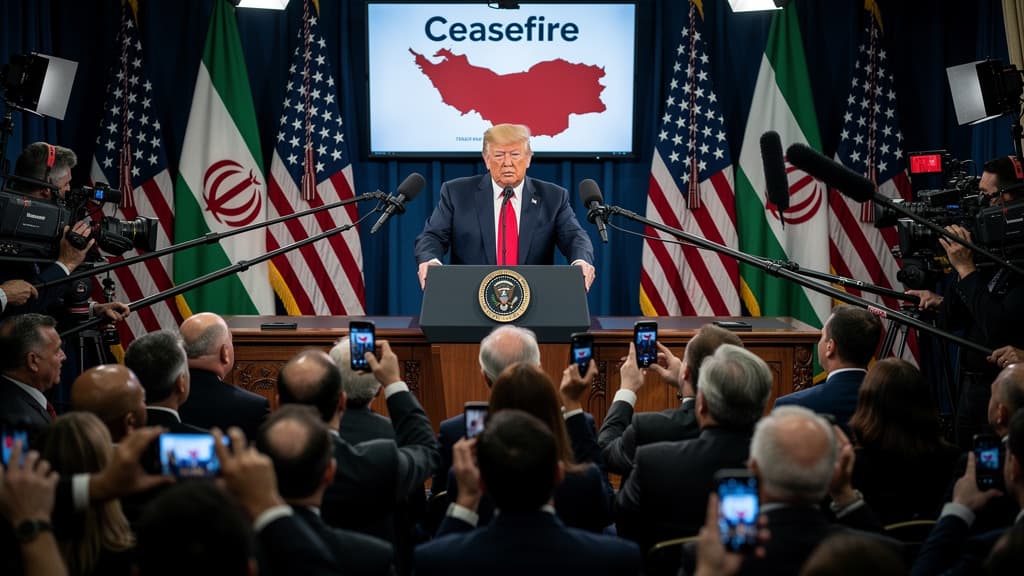
Amidst this rhetoric, both the United States and Iran have agreed to a temporary ceasefire after more than a month of conflict. This agreement is seen by some of Trump's supporters as a strategic victory while others regard it as a detrimental concession [5]. The ceasefire's announcement came as fighting continued in the region, with the Strait of Hormuz remaining closed and significant military action by Israel in Lebanon [5].
Trump's Negotiation Team
In a related development, Vice President JD Vance is set to lead a US delegation for negotiations with Iran in Pakistan this Saturday, indicating ongoing diplomatic efforts alongside the stark public threats [1]. This move suggests attempts to balance hardline rhetoric with potential diplomatic resolutions.
Impact on Trump's Support Base
Within Trump's political support base, reactions have been divided. Loyalists have praised the ceasefire as a strategic masterstroke, while critics within the movement, like Laura Loomer, have criticized it as a negative outcome, arguing for continued aggressive policies towards Iran [6][7]. These internal disagreements within the "Make America Great Again" movement highlight the tensions in reconciling rhetoric with practical outcomes in foreign policy.
Conclusion
This series of events underscores the ongoing complexities in US-Iran relations under the Trump administration. The international and domestic political landscapes are closely watching these developments, particularly as they pertain to potential implications for global stability and US foreign policy objectives.