Recent Developments in U.S.-Iran Relations
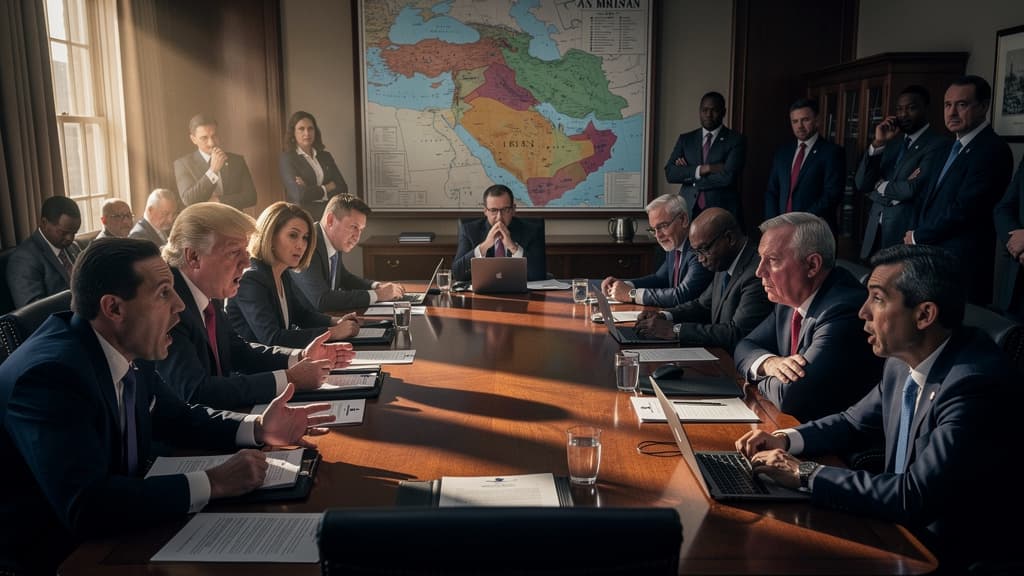
As of April 2026, tensions between the United States and Iran have escalated due to statements made by U.S. President Donald Trump. Trump's comments regarding potential military actions against Iran’s "whole civilization" have become a focal point of international discussion. A planned diplomatic meeting with Iranian officials in Pakistan is expected soon, led by Vice President JD Vance. The administration maintains its position on halting Iran's nuclear enrichment activities as a critical boundary [1][2].
Legal and Political Reactions in the U.S.
Trump's remarks have prompted scrutiny about possible legal ramifications, particularly concerning the rules of engagement and international law. Some legal analysts suggest that such rhetoric could be seen as self-incrimination if it implies intent to target civilian infrastructure, which is a potential violation of war laws [2]. This development has sparked a strong reaction from within the United States, where over 70 Democratic lawmakers have proposed the removal of Trump from office via the 25th Amendment or impeachment, citing concerns over his mental fitness for the presidency [3][5].
Congressional and Political Dynamics
The divided response from the political spectrum reflects broader tensions. While the majority of the Republican Party supports Trump's robust stance against Iran, there are Republicans expressing concerns privately. Notably, Senator Ron Johnson remarked on the possible implications of Trump's comments, hoping they were merely rhetorical [4]. In contrast, Democratic leaders are pushing for legislative mechanisms to limit presidential war powers, especially in light of recent escalations [5]. A series of war powers resolutions considered in Congress have previously been unsuccessful, but current events may invigorate new legislative efforts.
Impact on International Relations
Internationally, the situation has renewed discussions about the stability of the region and the impact of U.S. foreign policy on global diplomacy. Analysts and foreign leaders are closely monitoring the developments, particularly how they might affect ongoing and future diplomatic engagements with Iran. The upcoming negotiations could be crucial in deescalating tensions if successful outcomes are achieved.
The unfolding situation continues to be a matter of significant interest not only within the United States but also for the broader international community, as it might influence strategic alliances and economic conditions globally.[1][2][3]