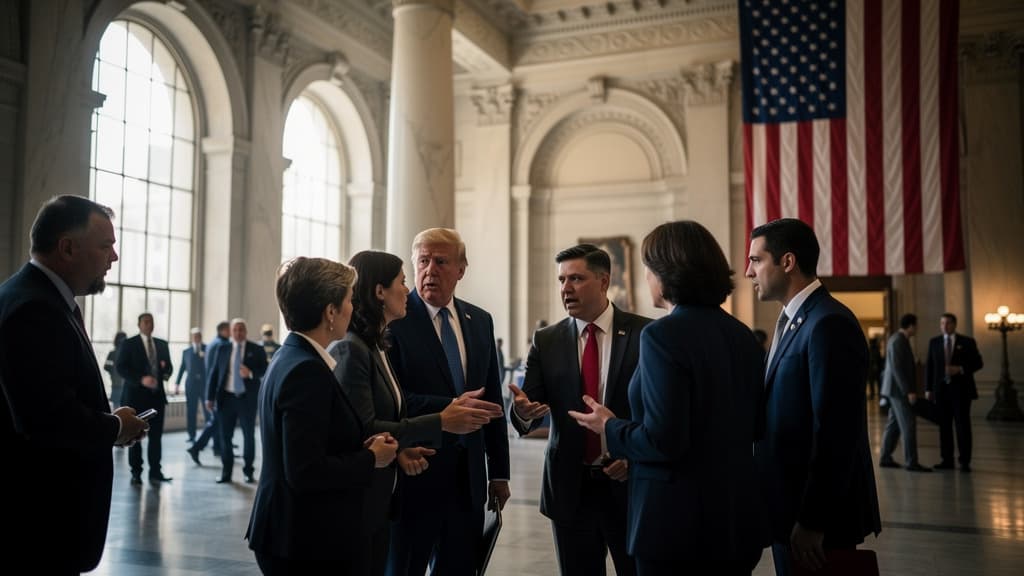
President Trump's Comments on Iran
President Donald Trump's recent statements regarding Iran have sparked significant controversy and debate. In a series of remarks and posts on social media, Trump has vowed to severely impact Iran's infrastructure and warned of drastic actions should Iran not comply with U.S. demands. His statements have raised concerns over potential violations of international law and have led to discussions about possible war crimes [2][4].
Political Reactions in the United States
The reaction within the United States has been polarized. More than 70 Democratic lawmakers have called for President Trump's removal from office through the invocation of the 25th Amendment or impeachment. The lawmakers argue that Trump's physical and mental fitness to serve is in question due to his recent statements and actions regarding Iran [3][5].
Conversely, the majority of the Republican party has expressed support for Trump's position, though some members have shown concern. Senator Ron Johnson, representing a minority perspective within the GOP, voiced his hope that Trump's threats were not intended to be taken literally [4].
International Implications
The heightened tensions with Iran have significant international implications. The U.S. administration, led by Vice President JD Vance, plans to engage in negotiations with Iranian representatives in Pakistan later this week. These talks are expected to address the ongoing nuclear enrichment issues and broader strategic concerns between the two nations [1].
As of Tuesday, a temporary ceasefire has been observed, but questions remain regarding the future stability of relations in the region. Democratic leaders in Congress continue to push for legislative actions to limit the president's war powers, emphasizing the need for diplomatic rather than military solutions [5].
Legal and Ethical Considerations
Experts in international law have raised alarms about the possible repercussions of President Trump's threats. Such rhetoric, if acted upon, could potentially contravene the Geneva Conventions, which prohibit acts of war that cause unnecessary suffering and destruction [2]. The consideration of these threats in a legal context may further complicate U.S. strategies in dealing with Iran.
The situation continues to evolve, as upcoming negotiations may offer a diplomatic path towards resolving escalating tensions. Observers are closely monitoring President Trump's communications and potential policy shifts in response to both domestic and international pressures [1][3].