Hungary Prepares for Crucial Election
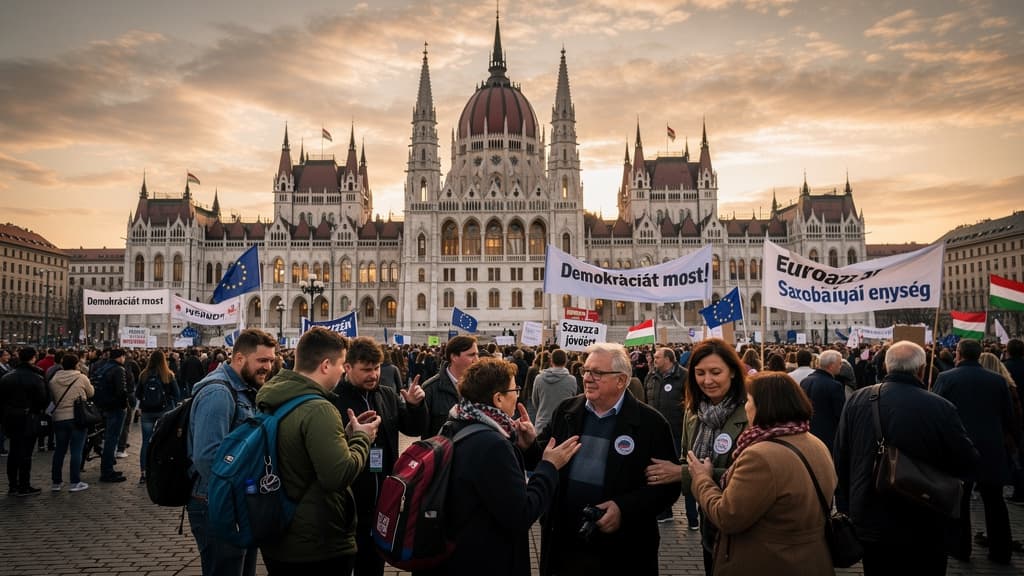
Hungary is set to hold an election on Sunday, a pivotal moment for its domestic and international standing. Prime Minister Viktor Orbán, known for his "illiberal democracy" governance approach, faces a robust challenge from Péter Magyar, who is capitalizing on voter dissatisfaction [1].
Key Players and Political Context
Viktor Orbán has been a prominent figure in Hungarian politics, having served as Prime Minister since 2010. Orbán's policies have often attracted criticism from European Union allies, particularly concerning rule of law and media freedoms. His main opponent, Péter Magyar, represents a coalition drawing from various opposition parties aiming to present a united front against Orbán's long-standing administration [1].
Implications for NATO and U.S.-Hungary Relations
The election's outcome is expected to have implications beyond Hungary’s borders. A shift in leadership could influence Hungary's interactions within the European Union and its commitments to NATO. The region's stability is of interest to many parties, including the United States. Recently, Vice President JD Vance visited Budapest to discuss bilateral partnerships in sectors such as energy and technology, highlighting the strategic importance of Hungary in U.S. foreign policy considerations [2].
Economic and Security Considerations
Economic concerns, especially regarding energy cooperation, have been at the forefront of U.S.-Hungary relations. The two countries are seeking to deepen commercial ties and enhance cooperation in artificial intelligence as part of broader security and strategic stability goals [2]. The election results might impact how these agreements are approached and implemented in the future.
Europe Awaits the Outcomes
The European Union is closely monitoring the election, with potential ramifications for its political landscape. Hungary's positioning on various EU policies and alliances, especially under Orbán's leadership, has been contentious, making this election a critical juncture for the country's future direction and its role within Europe [1].