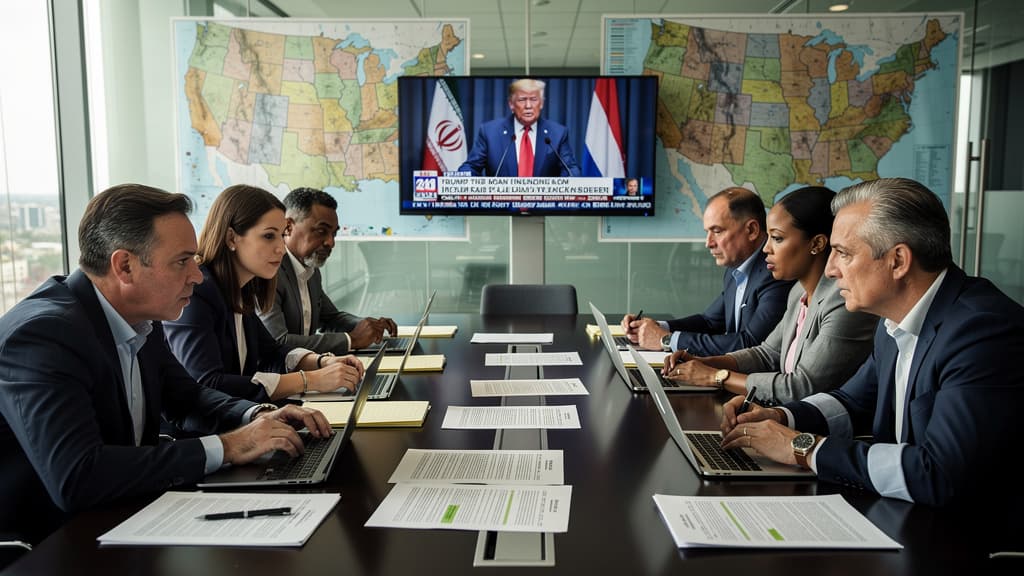
President Threatens Iran's Infrastructure
President Donald Trump recently made public statements threatening to eliminate significant portions of Iran's infrastructure, raising concerns about the potential for self-incrimination related to war crimes. These statements come as Iran and the United States have agreed to a two-week ceasefire following more than a month of hostilities. The ceasefire agreement follows efforts to defuse tensions, although the situation in the region remains tense, with continued military activity in areas such as the Strait of Hormuz and Israeli operations in Lebanon continuing concurrently [1][2].
Political Reactions in the U.S.
Trump's remarks have drawn varied reactions within the United States. Over 70 Democratic lawmakers have expressed their alarm, suggesting that these statements indicate a lack of mental fitness for office and have called for the president’s removal through impeachment or the 25th Amendment [3]. Conversely, within the Republican party, endorsements of Trump's position have been prevalent, though some members, such as Senator Ron Johnson, have voiced their hopes that the threats do not translate into actual policy actions [4].
Ongoing Negotiations with Iran
In light of these developments, Vice President JD Vance has been appointed to lead a U.S. delegation to negotiations with Iranian officials, set to occur in Pakistan this coming Saturday. This strategic move appears to aim at recalibrating diplomatic efforts while navigating the complexities introduced by the latest escalations [1]. According to statements from White House officials, President Trump's comments are not anticipated to impact America's broader diplomatic standing, emphasizing pragmatic policy objectives over rhetoric [6].
Internal Divisions Among Supporters
Within Trump's political base and the broader 'Make America Great Again' movement, reactions to the ceasefire and ongoing diplomatic engagements have been mixed. While some supporters laud the president for strategic maneuvering, others view the ceasefire agreement as a retreat, creating a notable divide within his core support demographic [5]. The mixed responses highlight the challenges inherent in balancing strong rhetoric with strategic diplomacy.
Strategic Outlook
The future trajectory of U.S.-Iran relations remains uncertain as stakeholders await the outcomes of scheduled negotiations. These developments come amid a broader geopolitical landscape where military engagements and peace efforts are simultaneously unfolding.
Observers will be closely monitoring the situation to assess whether diplomatic efforts can yield a tangible shift in the longstanding tensions between the United States and Iran.